
Hi there!
I am a PhD candidate at the Professorship for Visual Computing at FAU Erlangen-Nürnberg, supervised by Prof. Dr.-Ing. Tobias Günther.
About
I am interested in everything that has to do with visualization and computer graphics ... And most other
things
too.
Currently I am a PhD candidate at the
Professorship for Visual
Computing at FAU Erlangen-Nürnberg. My research focus is on
End-to-End Optimization for
Energy-Driven Scientific Visualization.
I previously studied computer science at FAU Erlangen-Nürnberg. You
can find more information about this and more on my LinkedIn profile.
Projects
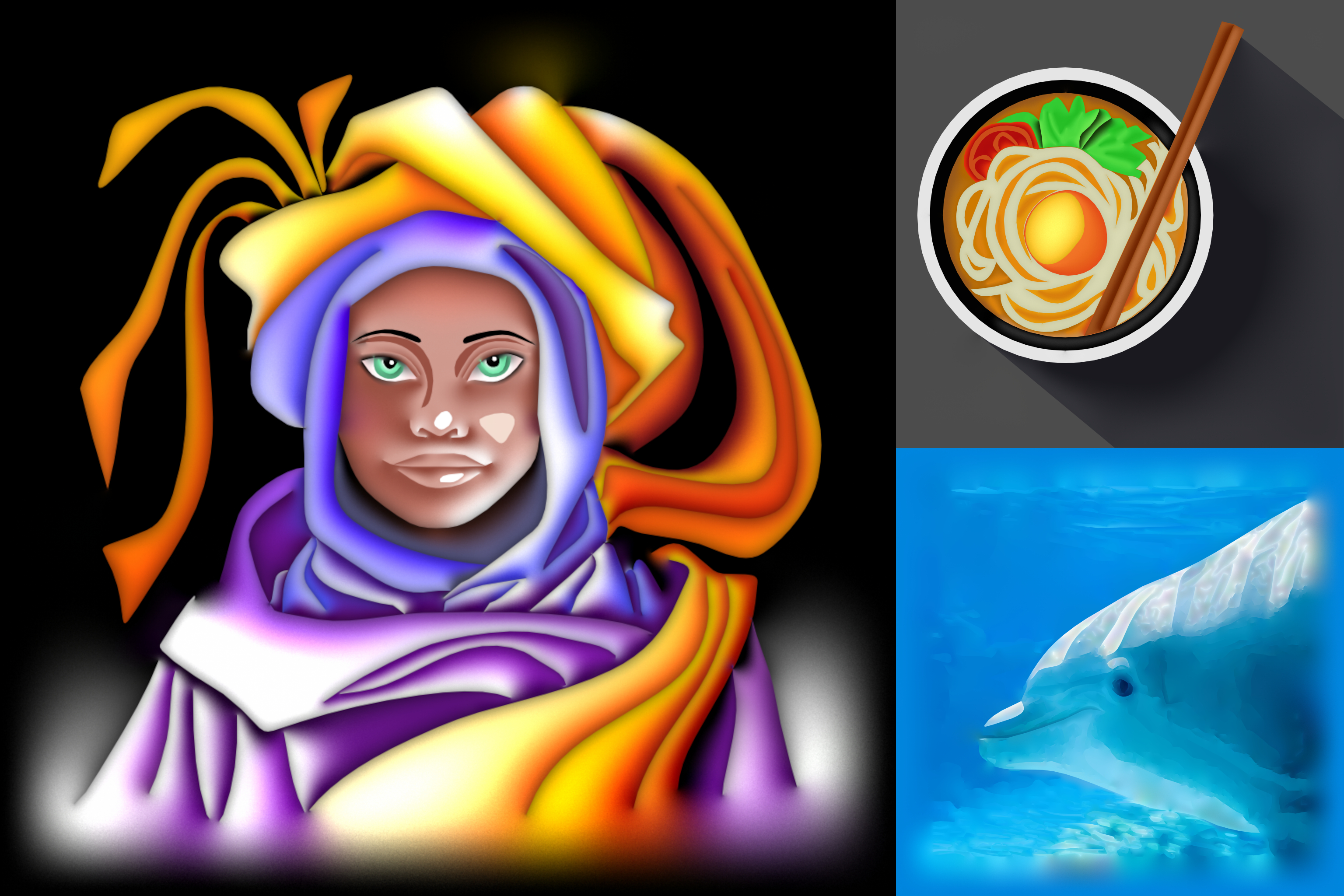
Monte Carlo Rendering of Biharmonic Diffusion Curves
- Journal Paper SIGGRAPH
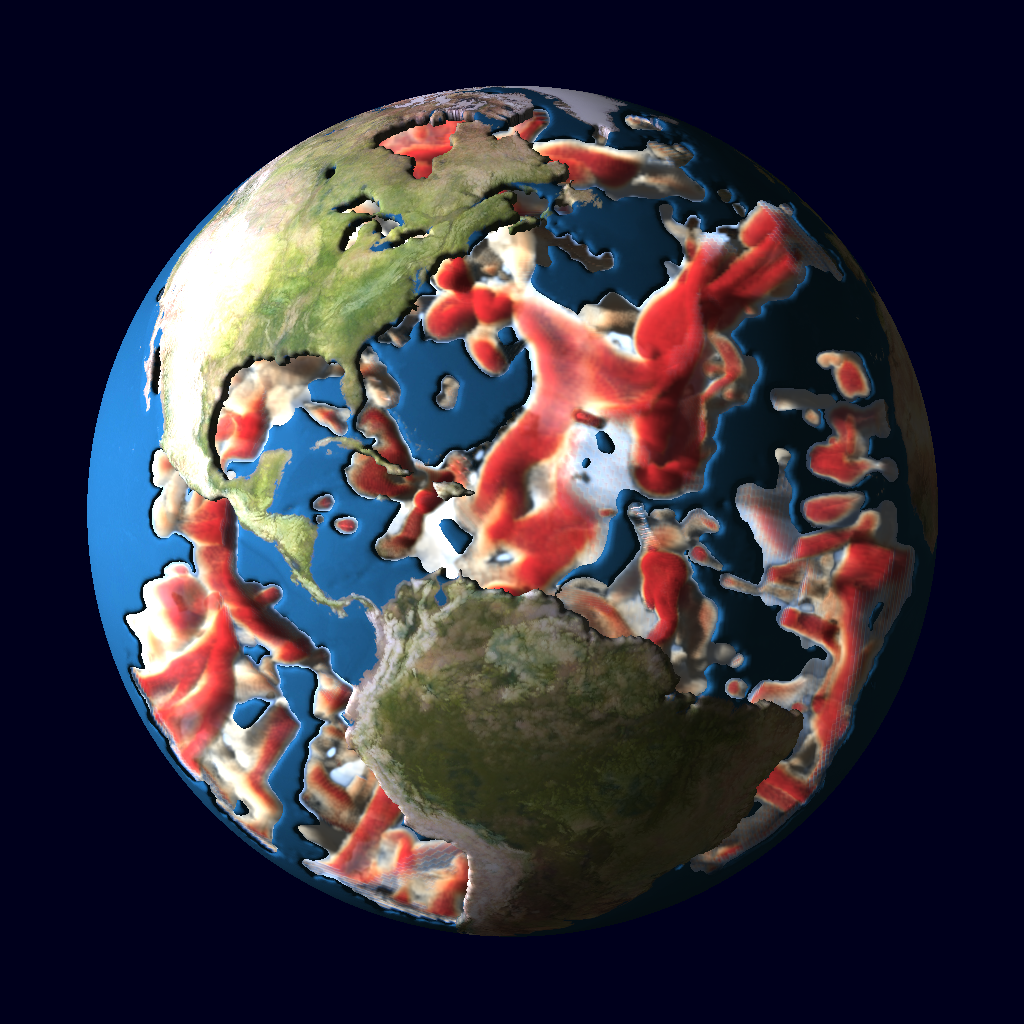
Visibility Optimization for Direct and Indirect Volume Rendering using Level Set Propagation
- TVCG
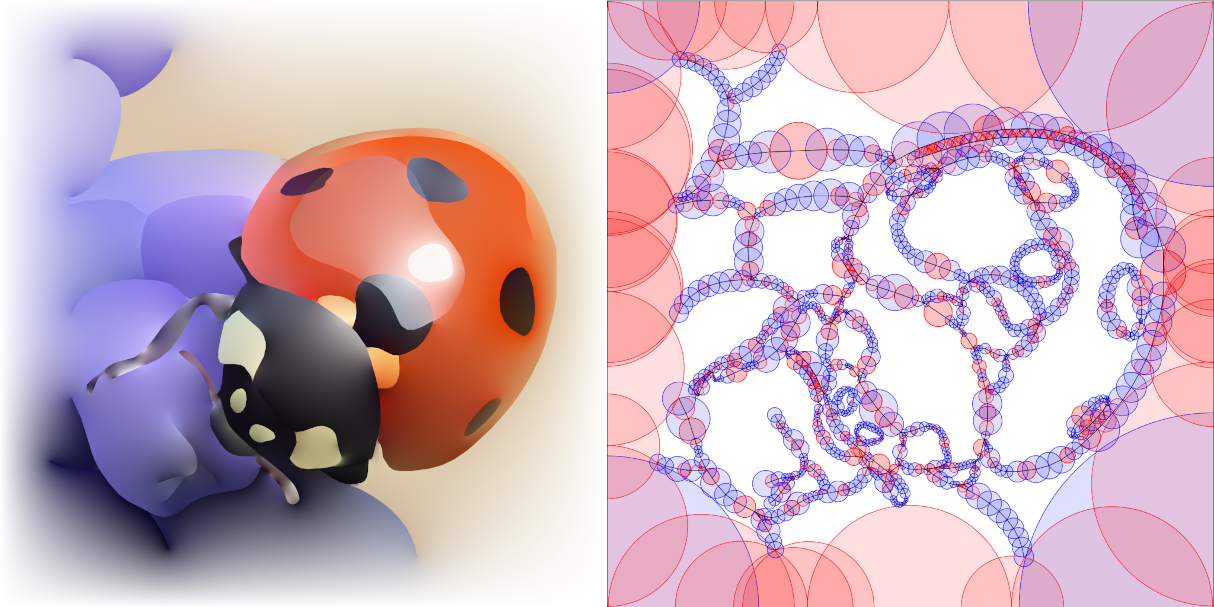
Conformal First Passage for Epsilon-free Walk-on-Spheres
- Journal Paper SIGGRAPH
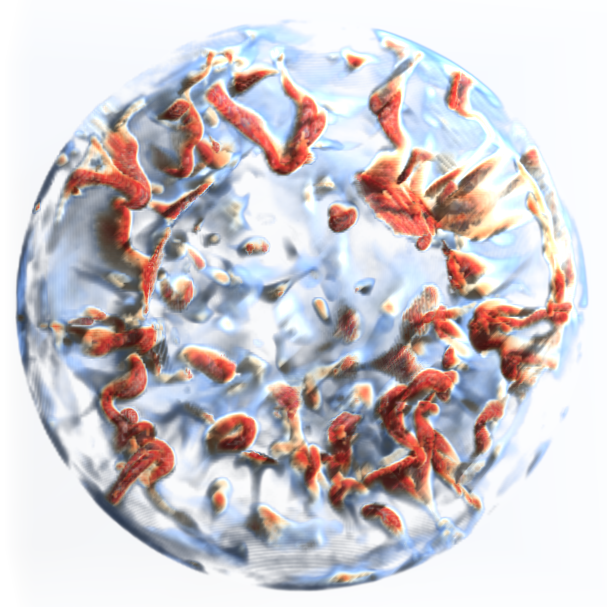
Transmittance-based Extinction and Viewpoint Optimization
- EuroVis
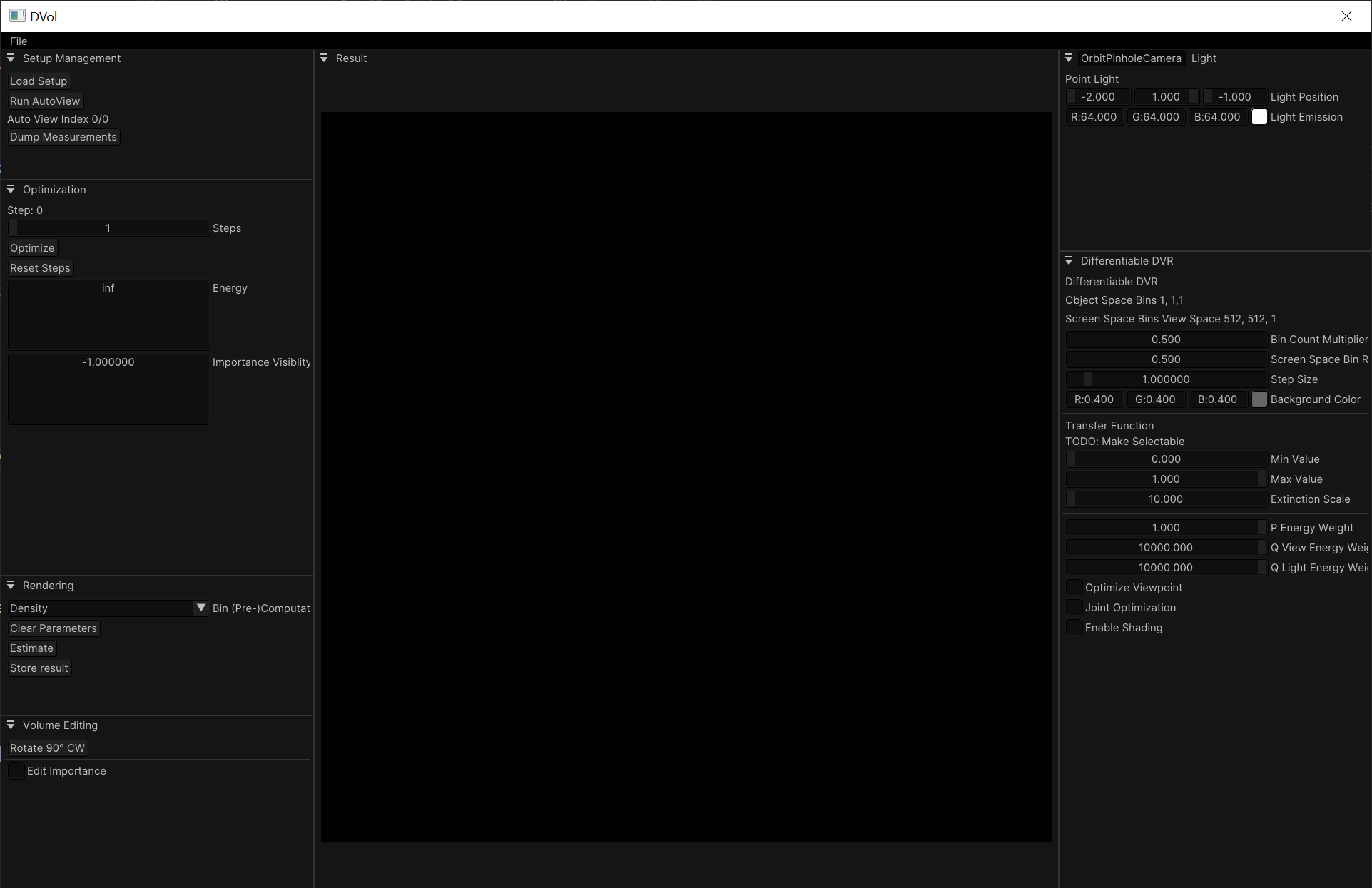
SAF: Simple Application Framework
- Leisure Research
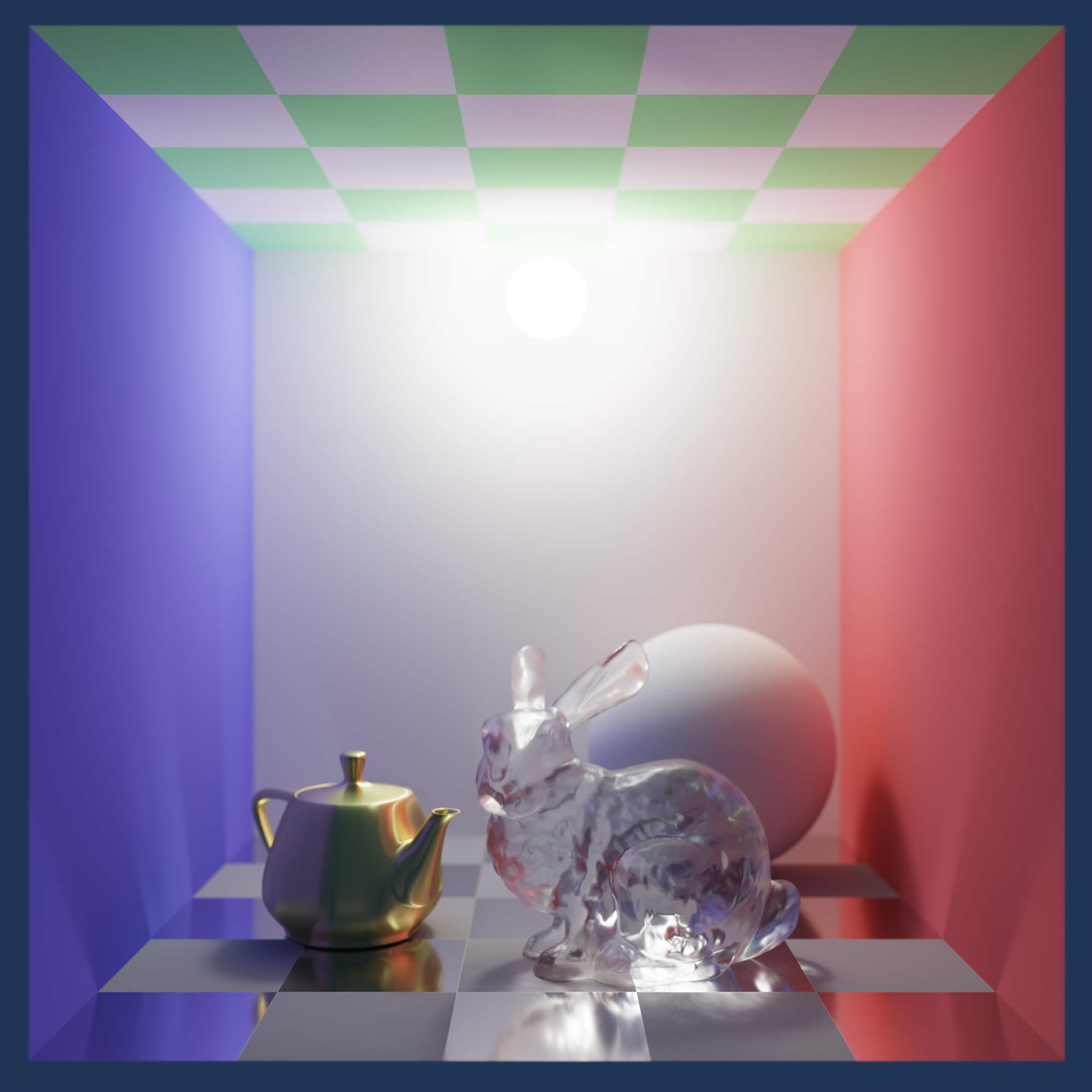
Rayce: Hardware Accelerated Pathtracing with Vulkan
- Leisure Research
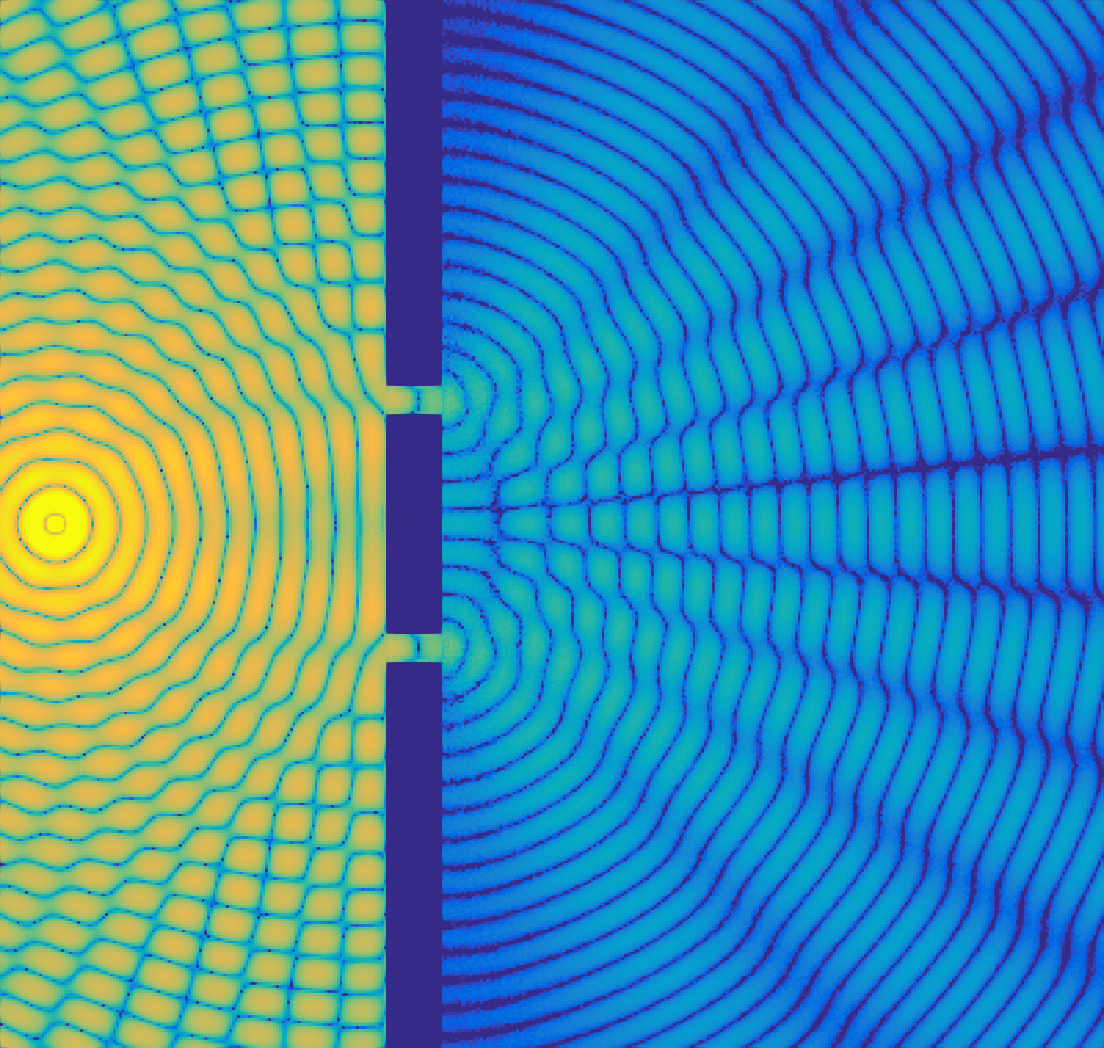
Electromagnetic Wave Transport with Maxwell's Equations
- Research
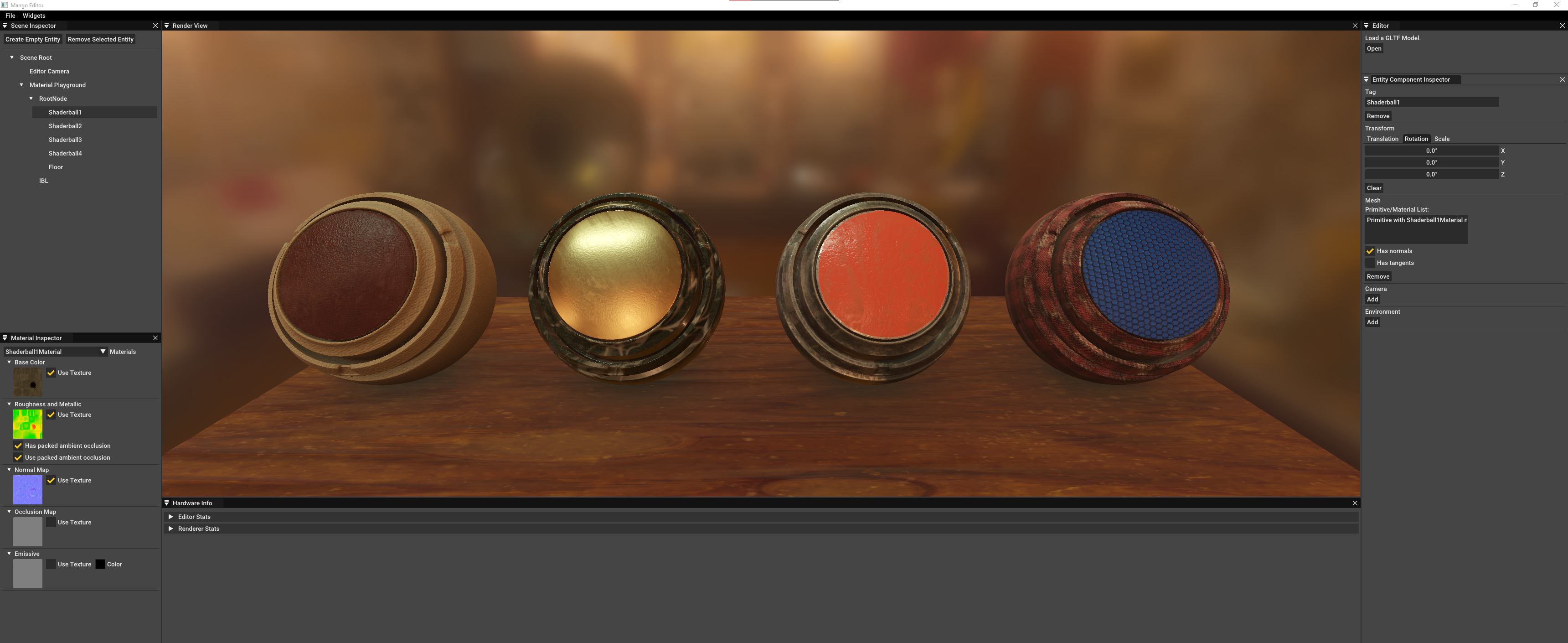
Mango: Graphics Playground/Engine
- Leisure Research
Monte Carlo Rendering of Biharmonic Diffusion Curves
Friedrich-Alexander-Universität Erlangen-Nürnberg
ACM Transactions on Graphics (SIGGRAPH), 2026
Stochastic Monte Carlo solvers for partial differential equations (PDEs) recently gained popularity in computer graphics, finding applications in geometry processing, rendering, simulation, and visualization. At present, there exists no Monte Carlo solver for the rendering of biharmonic diffusion curves, an artist-friendly smooth vector graphics primitive. The fourth-order biharmonic equation of biharmonic diffusion curves can be split into two second-order PDEs, namely a Laplace and a Poisson equation. However, since biharmonic diffusion curves set Dirichlet and inhomogeneous Neumann conditions at the same time, these two second-order PDEs are tightly coupled and can hence not be solved directly. We propose to treat the rendering of biharmonic diffusion curves as an inverse problem, in which the Dirichlet data of the Laplace equation is unknown. We formulate a variational energy optimization, such that the user-defined boundary conditions are met. Thereby, the necessary gradients are estimated stochastically by solving two second-order problems with Dirichlet boundary conditions only.
Visibility Optimization for Direct and Indirect Volume Rendering using Level Set Propagation
Friedrich-Alexander-Universität Erlangen-Nürnberg
IEEE Transactions on Visualization and Computer Graphics, 2026
Volumetric data arises in many scientific disciplines, describing the tissue in our body, the composition of the Earth, or the distribution of matter in the universe, to name a few. Such volume data is commonly visualized with direct methods such as ray marching, and with indirect methods such as isocontours. The combination of these approaches is fruitful to provide context and to enhance depth perception. A common challenge, however, is that three-dimensional data inherently leads to occlusions, for which visibility optimization techniques have been employed in the past. The joint visibility optimization of volumetric data (direct volume rendering) and surface geometry (indirect volume rendering) is challenging. With this paper, we provide an optimization approach in which explicit and implicit geometry, such as isocontours or closed context geometry, as well as the volume itself give way to reveal structures that have been identified as important by a user. We model the geometry implicitly as level set of a signed distance field, which is evolved under a normal flow to reduce the occlusion. The non-linear optimization involves gradient descent solvers, level set propagation, and multi-grid optimization. We compare our approach to previous visibility optimizations.
Conformal First Passage for Epsilon-free Walk-on-Spheres
Friedrich-Alexander-Universität Erlangen-Nürnberg
ACM Transactions on Graphics (SIGGRAPH), 2025
In recent years, grid-free Monte Carlo methods have gained increasing popularity for solving fundamental partial differential equations. For a given point in the domain, the Walk-on-Spheres method solves a boundary integral equation by integrating recursively over the largest possible sphere. When the walks approach boundaries with Dirichlet conditions, the number of path vertices increases considerably, since the step size becomes smaller with decreasing distance to the boundary. In practice, the walks are terminated once they reach an epsilon-shell around the boundary. This, however, introduces bias, leading to a trade-off between accuracy and performance. Instead of using spheres, we propose to utilize geometric primitives that share more than one point with the boundary to increase the likelihood of immediately terminating. Along the boundary of those new geometric primitives a sampling probability is needed, which corresponds to the exit probability of a Brownian motion. This is known as a first passage problem. Utilizing that Laplace equations are invariant under conformal maps, we transform exit points from unit circles to the exit points of our geometric primitives, for which we describe a suitable placement strategy. With this, we obtain a novel approach to solve the Laplace equation in two dimensions, which does not require an epsilon-shell, significantly reduces the number of path vertices, and reduces inaccuracies near Dirichlet boundaries.
Transmittance-based Extinction and Viewpoint Optimization
Friedrich-Alexander-Universität Erlangen-Nürnberg
Computer Graphics Forum (Proc. EuroVis) 2024
A long-standing challenge in volume visualization is the effective communication of relevant spatial structures that might be hidden due to occlusions. Given a scalar field that indicates the importance of every point in the domain, previous work synthesized volume visualizations by weighted averaging of samples along view rays or by optimizing a spatially-varying extinction field through an energy minimization. This energy minimization, however, did not directly measure the contribution of an individual sample to the final pixel color. In this paper, we measure the visibility of relevant structures directly by incorporating the transmittance into a non-linear energy minimization. For the first time, we not only perform a transmittance-based extinction optimization, we concurrently optimize the camera position to find ideal viewpoints. We derive the partial derivatives for the gradient-based optimization symbolically, which makes the application of automatic differentiation methods unnecessary. The transmittance-based formulation gives a direct visibility measure that is communicated to the user in order to make aware of potentially overlooked relevant structures. Our approach is compatible with any measure of importance and its versatility is demonstrated in multiple data sets.
SAF: Simple Application Framework
Rayce: Hardware Accelerated Pathtracing with Vulkan
Electromagnetic Wave Transport with Maxwell's Equations
Master’s Thesis (graded 1.0)
Understanding and simulating the general behavior of electromagnetic waves in arbitrary environments is a challenging problem, not only in mathematical or physical terms, but also in algorithmic terms. Mathematical formulations based on physical observations, such as Maxwell’s equations, do exist, but their calculation is a complex and difficult undertaking. At the same time, an understanding of these processes is of paramount importance because the sheer size of the electromagnetic spectrum means that the applications are also diverse. From X-rays in medicine, to visible light in visualization, to radar waves, such as those used in the automotive industry, to name just a few direct fields of application. In addition, many other scenarios such as quantum mechanics or audio wave simulation could benefit from a general algorithmic description for electromagnetic wave behavior. Particularly, wave properties such as diffraction and interference are of high interest. Thus, to gain important insights, a computer simulation of the real world behavior of electromagnetic waves would be of great benefit. By its very nature, it is not easy to build such a simulation since it requires solving a second-order linear partial differential equation, the wave equation. Moreover, many of the defining properties occur only at relatively small scales, which poses numerical problems. There are strategies such as the Finite-Difference Time-Domain Method or the Method of Moments. However, they suffer from limitations regarding domain size or overall accuracy. We present a method based on Monte Carlo integration that attempts to overcome any discretization constraints, showcasing a different approach to the problem. In this thesis, a brief overview of the physical and mathematical basics is given at the beginning. In addition, related work and alternative approaches are discussed. Then, we proceed with the development of the Monte Carlo Waves method to simulate electromagnetic waves. Our method solves the inhomogeneous Helmholtz equation in several subdomains. For this, we must find valid boundary conditions to achieve physically plausible results. After explaining the principle algorithm, an analysis of the results is presented. In order to consolidate the presented approach, it is compared to existing methods. At the end, an outlook is given and possible further developments are discussed.
Mango: Graphics Playground/Engine
Details
Mango is an Open Source Framework. Or at least it should be in the future. A playground for people like me.
Just to be clear: This is not the first attempt! I plan to implement various features, with main focus on computer graphics. A few of them are described below, but there will be added a lot more in the future. There should also always be a documentation and tests to ensure cleaner and more functional code.
Features
Building and running on Linux and Windows.
Basic support of GLTF models (No animations yet, some features missing, no draco encoding)
HDR support and image based lighting
Directional light with Cascaded Shadow Mapping
Basic GUI with DearImGui with widgets
Many physically based rendering features
Deferred rendering with OpenGL backend
Entity Component System
Basic framework architecture
Editor featuring .gltf and .hdr file loading and a simple camera controller
Profiling with Tracy